
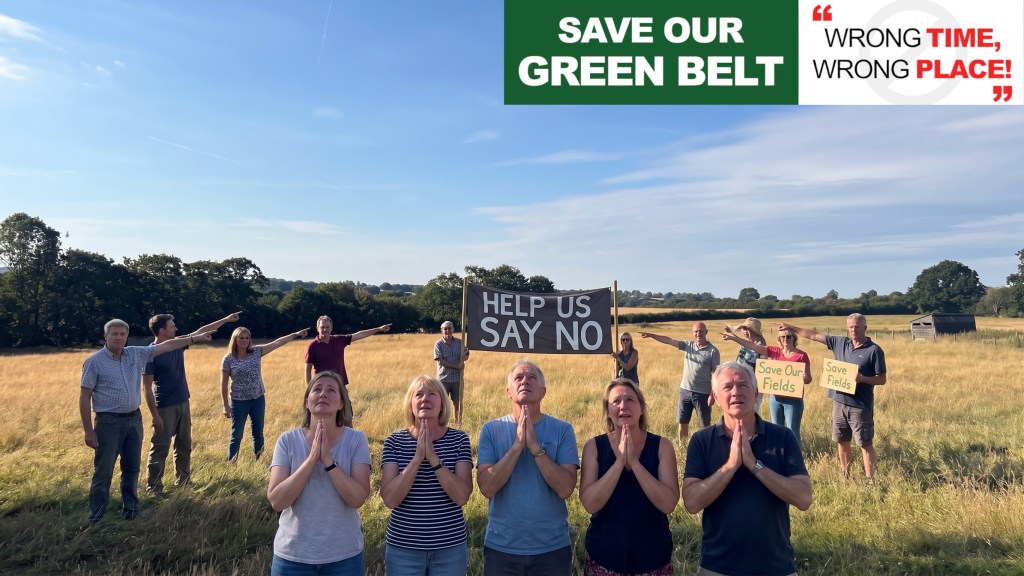
We are constantly fighting to protect our town from the speculative bulldozer. But the battle for the 56.6 acres off Coulter Lane and Church Road is not just about stopping traffic congestion or protecting Green Belt. It is a fight to preserve a foundational cornerstone of national Black British history.

Lichfield District Council’s planning directorate and Bloor Homes want you to believe these fields are an anonymous farming and grazing agricultural void, waiting to be paved over with 250 executive houses. They are wrong. This land is the unsevered rural setting of Britain’s very first Black schoolmaster.
To ensure this history is on the record and understood by the wider public, we have compiled the story of Francis Barber, his profound connection to our town, and the community’s fully funded alternative to save this landscape: The Francis Barber Heritage & Nature Reserve.
1. From the Orange River Plantation to the Freezing North (The Boy Called “Quashey”) Francis Barber’s life began in unimaginable hardship. Born around 1742 or 1743 on the northern coast of Jamaica, he was born into slavery on the Orange River sugarcane plantation. He was one of roughly 150 enslaved people owned by Colonel Richard Bathurst. His original birth name is believed to have been “Quashey,” a traditional Coromantee name commonly given to enslaved boys born on a Sunday.
At the age of about eight or nine, Colonel Bathurst brought the young boy across the Atlantic to England in 1750. Shortly after arriving in London, he was taken to a church, baptised into the Church of England, and given the new name of Francis Barber.
Despite his new name, he was entirely alone in the world, decisively taken away from his parents and siblings. Colonel Bathurst subsequently sent him far away from London to a boarding school in the freezing North Riding of Yorkshire, in the village of Barton near Richmond, where he began to learn to read and write.
2. The Heir to a Literary Giant In March 1752, Dr. Samuel Johnson—one of the greatest literary figures in English history and the author of the famous Dictionary of the English Language—lost his wife, Elizabeth. Plunged into a deep, agonising depression, Johnson’s close friend Dr. Richard Bathurst (the Colonel’s son) orchestrated a plan to send the young Francis to Johnson’s household at Gough Square, hoping the boy’s presence would lift Johnson’s spirits.
Francis became far more than a valet or servant; Johnson, an outspoken opponent of slavery, treated him like a surrogate son. He forged a deep emotional bond with the eccentric literary giant, running errands and delivering copy for the monumental Dictionary to the printers. When Francis briefly signed up to serve in the Royal Navy aboard the HMS Stag as a “landsman,” Johnson was so distressed he pulled strings with the Admiralty to secure the boy’s discharge.
Johnson insisted on furthering Francis’s education, sending him to the prestigious Bishop’s Stortford Grammar School in Hertfordshire. When Dr. Johnson died in 1784, he defied the prejudices of 18th-century England. He made Francis Barber his residual heir, bequeathing him his books, his papers, his gold watch, and a massive £70-a-year annuity, which is equivalent to roughly £9,000 today.
3. The Move to Burntwood and the “Scholarship Soil” Following Johnson’s death, Francis moved to the Lichfield area—Johnson’s birthplace—with his white wife, Betsy (Elizabeth). However, it is the next chapter of his life that anchors his legacy permanently in Burntwood.
Between 1797 and 1799, the couple moved to Burntwood to take up residency and teaching duties at the Old School House located on the corner of Coulter Lane. This was not a standard school; it was an educational charity funded by a historic 1765 endowment of £600 provided by a wealthy local woman named Elizabeth Ball.
The physical agricultural fields that Bloor Homes currently wants to bulldoze (the Fulfen Farm estate) constituted the primary endowed land that generated the tenant yields and revenues to fund this charity school. The community revered this land as “Scholarship Soil”. It was on this exact soil, supported by the yields of these exact fields, that Francis Barber established his school, making him widely recognised by modern historians as Britain’s very first Black schoolmaster.
We have placed unequivocal expert testimony on the permanent planning record from Michael Bundock, author of The Fortunes of Francis Barber, who confirms: “A freed slave and Samuel Johnson’s heir, he is believed to be the nation’s very first Black school master. And the place that this important history was made is known to be Burntwood in Staffordshire, where he established a school in about 1797”.
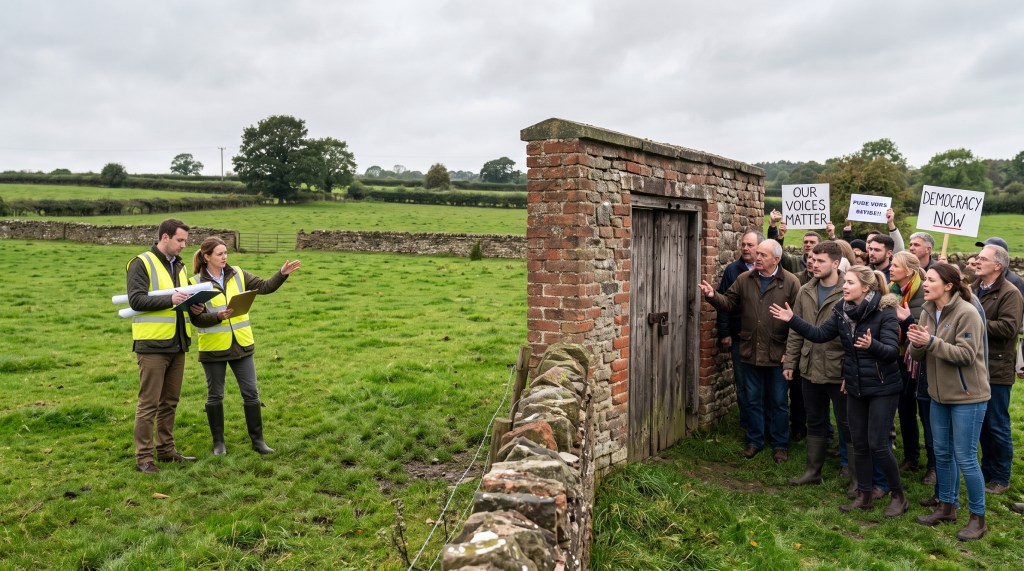
4. The Council’s Shameful Erasure Under the National Planning Policy Framework (NPPF) Paragraph 203, the Coulter Lane fields and the Old School House qualify as a Non-Designated Heritage Asset of National Importance. They represent the unsevered rural setting and the last surviving open landscape of Barber’s pioneering educational legacy.
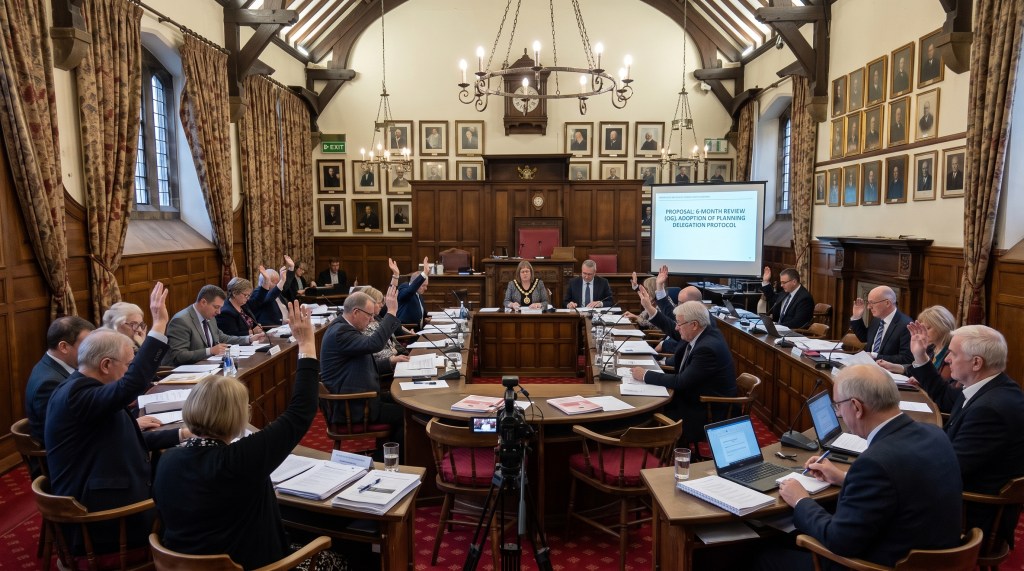
So, how did the Lichfield District Council planning directorate handle this monumental history in their formal 20 July 2026 Planning Committee Report? They actively attempted to erase it to clear the path for the developer.
The Conservation Officer arrogantly dismissed the building, stating that due to “minimal information,” it has “low significance as a non-designated heritage asset”. Worse still, Case Officer Gillian Pinna-Morrell issued a blanket, bureaucratic dismissal of Barber’s legacy, writing: “Whilst the previous ownership of the land, and the philanthropic work of such individuals are acknowledged as pieces of local history, the land forming the application site does not have any formal historic status”.
By dismissing a formerly enslaved Jamaican boy who rose to become a British literary heir and our nation’s first Black schoolmaster as mere “local history,” the council is committing a direct failure of the Government’s statutory Public Sector Equality Duty to protect diverse, underrepresented cultural heritage.
5. The Community’s Vision: The Francis Barber Heritage & Nature Reserve The Burntwood Action Group is not just saying “no” to housing on this site; we are offering a visionary, fully funded alternative. We submitted a comprehensive Master Business Plan to the council to legally transition these 56.6 acres into the Francis Barber Heritage & Nature Reserve.
Managed by the Barber Community Trust (BCT), this project would establish a permanent, community-led natural asset. By tapping into the statutory Biodiversity Net Gain (BNG) market and National Lottery Heritage Grants, the reserve would achieve 100% financial self-sufficiency within 36 months, costing the local taxpayer absolutely nothing.
Our plan includes:
- Ecological Acceleration: Transforming low-yielding pasture into high-distinctiveness alluvial wetlands and species-rich neutral grasslands, creating a secure sanctuary for red-listed birds and protected mammals.
- The Heritage Hub: Sensitively restoring the existing rural brick outbuildings into a zero-carbon learning center, traditional basketry studio, and active blacksmithing forge.
- The Living Classroom: Partnering with over 30 local schools to deliver curriculum-linked modules on diverse history, specifically focusing on the Francis Barber legacy, alongside outdoor STEM tracking programs.
Despite this incredible, viable alternative, the council’s legal department laughably rejected our Asset of Community Value (ACV) nomination on a minor technicality. Because we responsibly restricted public footpaths to the site’s boundaries to protect highly sensitive ground-nesting birds, the council ruled our community use was merely “ancillary”. They used our strict ecological safeguarding as an excuse to block a fully funded community reserve, yet simultaneously recommended approving 250 concrete houses directly on top of those exact same nesting grounds.
The Fight Continues We will not allow a volume housebuilder to superimpose a 12.5-metre vertical topographical mass over a 250-year-old educational landscape. We will not allow the local planning directorate to bury the legacy of Francis Barber.
Stay loud, Burntwood.


Leave a Reply