
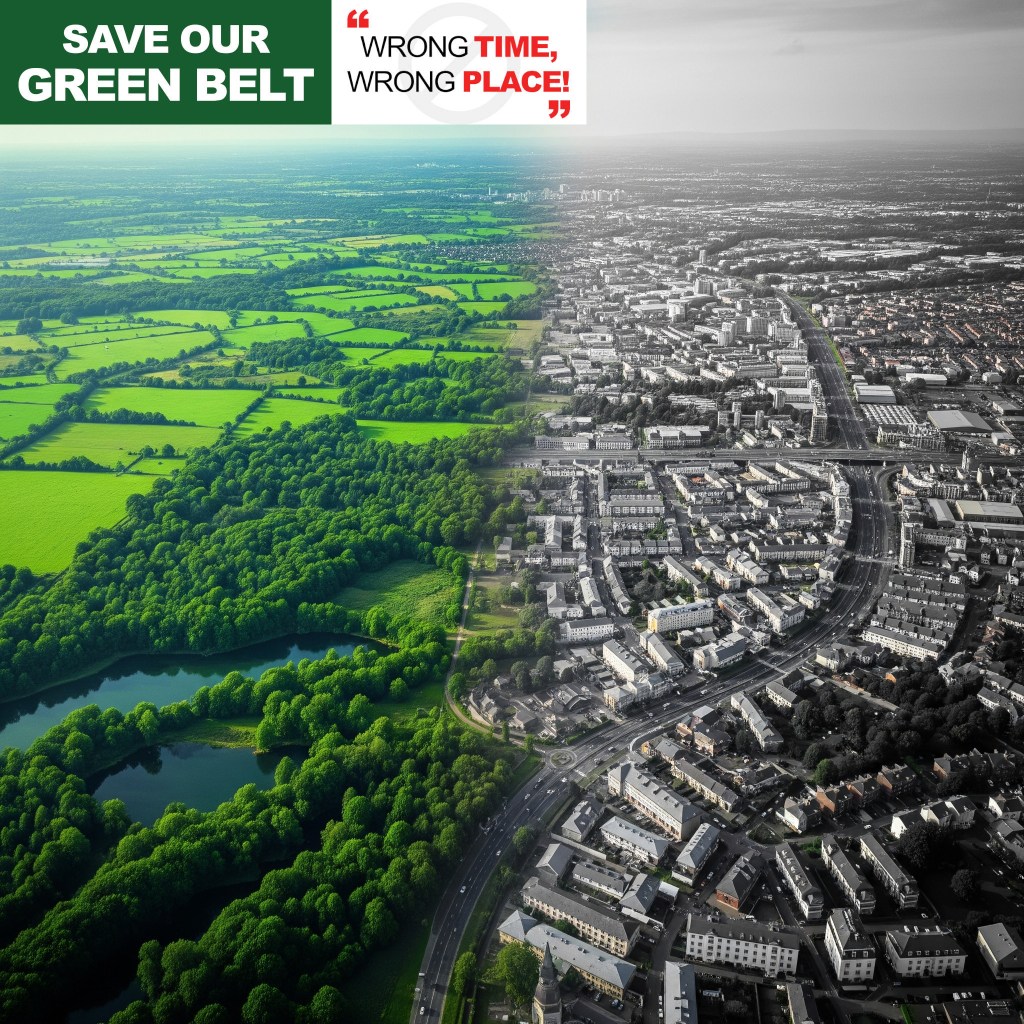
The Labour government’s recent overhaul of the National Planning Policy Framework (NPPF) has sparked significant concern regarding the future of our cherished Green Belt land. While the initial promise was to focus on “old car parks, disused petrol stations and old disused land,” the reality is a much broader reclassification, opening up vast swathes of Green Belt to development.
We and many others are alarmed by the new definition of “Grey Belt” within the NPPF, which now includes “previously developed land and/or any other land that… does not strongly contribute to any of purposes (a), (b), or (d) in paragraph 143.” These purposes relate to checking urban sprawl, preventing towns from merging, and preserving the setting of historic towns. Crucially, two other Green Belt purposes – safeguarding the countryside from encroachment and assisting in urban regeneration – are not included in the Grey Belt definition, leading to fears that land which serves a valuable role in protecting our green spaces is being reclassified.
This new definition, we argue, is ambiguous and open to wide interpretation by developers and local councils. While local councils retain the final decision-making power, the lack of specific guidance on what constitutes “strongly contributing” to the Green Belt purposes could lead to inconsistent and potentially detrimental outcomes across the country.
The government’s stated aim is to address the housing crisis and deliver 1.5 million new homes, and they see Green Belt reform as a key part of this. The updated NPPF now mandates Green Belt boundary reviews for local authorities that cannot meet their housing needs through other means. Furthermore, development on “sustainable Grey Belt land” may no longer be considered “inappropriate” where certain “Golden Rules” are met, including a requirement for at least 50% affordable housing for major residential developments.
However, the concern remains that this flexibility will inevitably lead to the loss of genuinely green spaces that provide environmental, recreational, and aesthetic value to communities. The original intention of Green Belt policy was to prevent urban sprawl and keep land permanently open. The current changes risk undermining this fundamental principle.
Our Green Belt is a vital asset, providing essential green lungs for our towns and cities, supporting biodiversity, and offering recreational opportunities. Its integrity is now arguably under unprecedented threat. It is crucial that local councillors, on behalf of their communities, push back against ambiguous interpretations and ensure that the spirit of Green Belt protection is maintained.
Watch this video below to gain a deeper understanding of the challenges our Green Belt now faces and what this could mean for our shared landscape.

 Burntwood Action Group
Leave a reply to Burntwood Action Group Cancel reply