
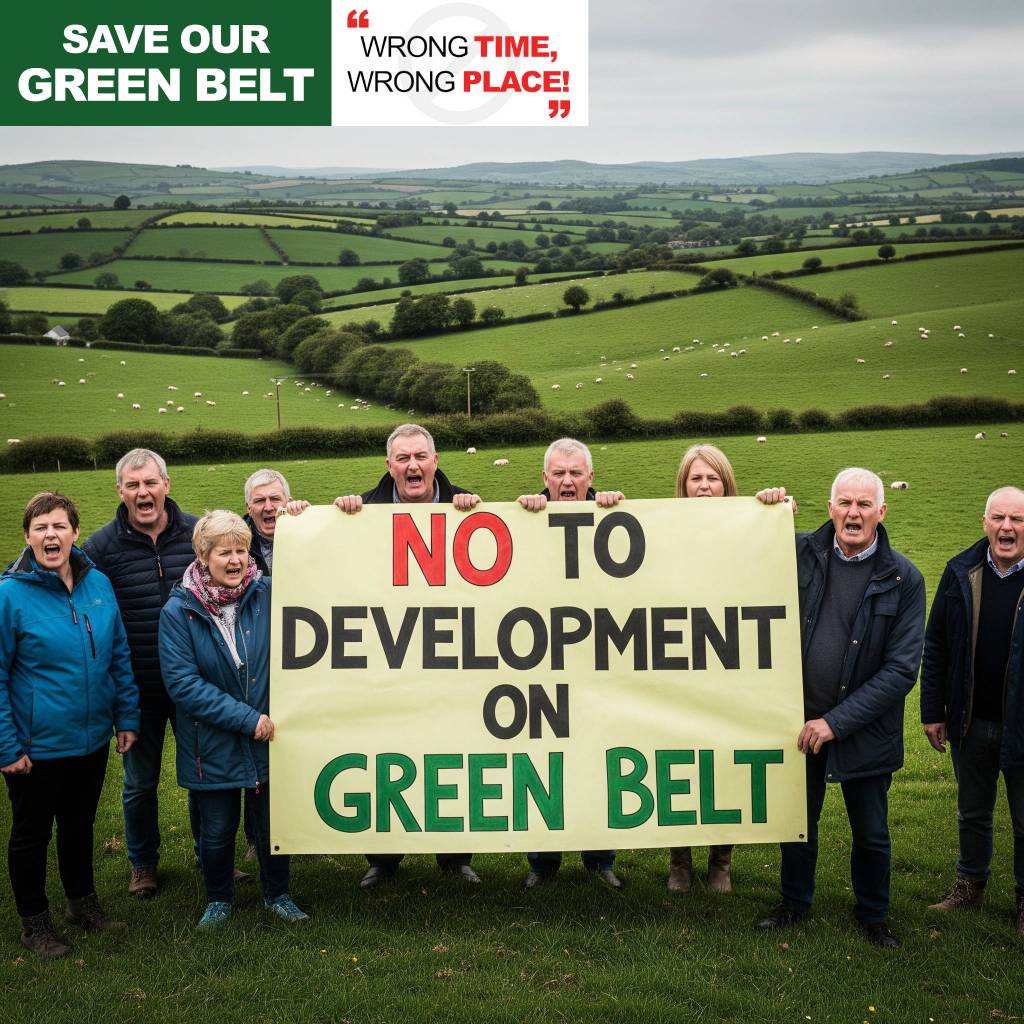
Whilst we are led to believe that converting Green Belt to Grey Belt this offers a pragmatic solution to housing shortages, we in Burntwood do not agree. Here’s why we argue against it:
1. Erosion of Green Belt Principles:
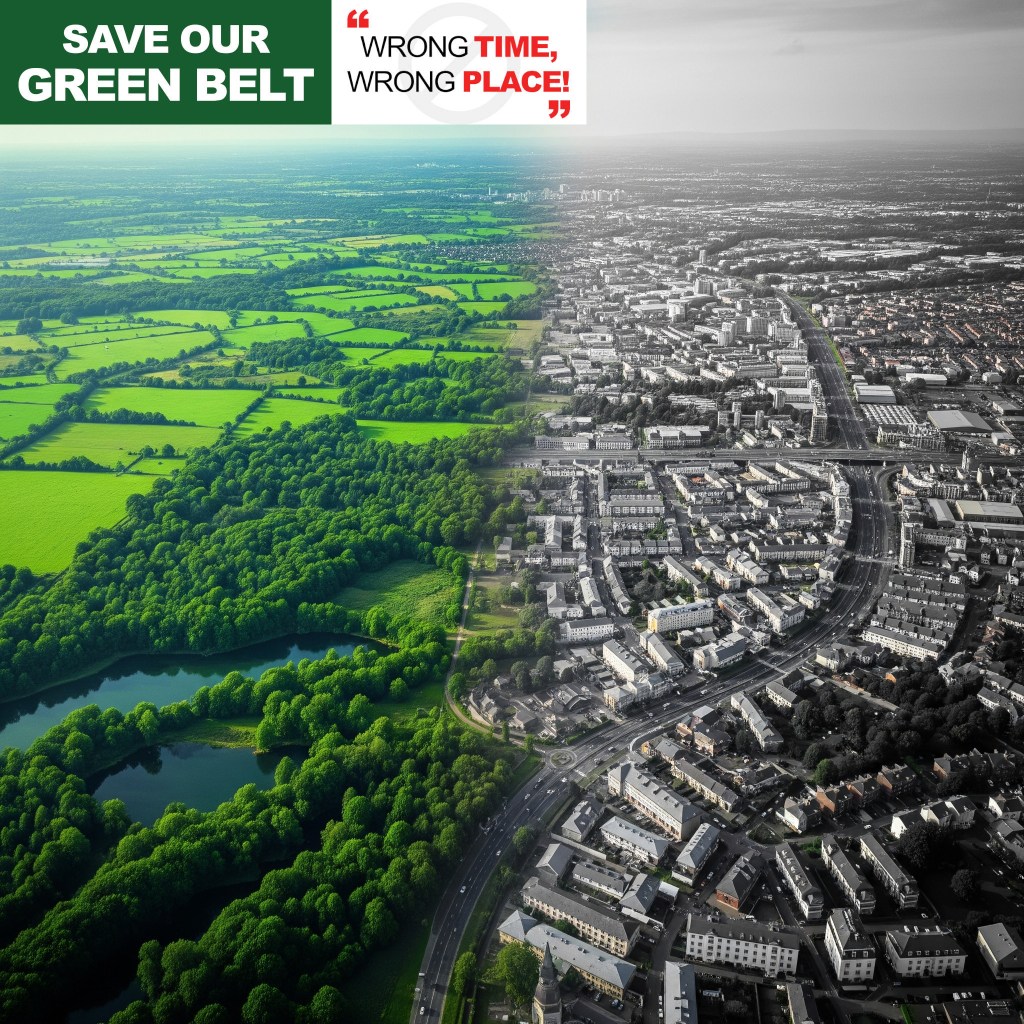
- Weakening of Urban Containment: The primary purpose of the Green Belt is to prevent urban sprawl and keep land permanently open. Reclassifying and developing even “low-quality” Green Belt land, we argue, sets a dangerous precedent. It could lead to a gradual, incremental erosion of the Green Belt’s integrity, eventually blurring the lines between urban and rural areas.
- “Thin End of the Wedge” Argument: we fear that once a portion of the Green Belt is opened up, it becomes easier to justify further incursions. This could lead to a domino effect, with more and more Green Belt land being designated as “Grey Belt” over time, driven by development pressures.
- Loss of Openness: Even if a site is “previously developed” or “low quality,” it still contributes to the overall openness of the Green Belt. Development on these sites, by definition, reduces that openness, impacting the visual and spatial separation between settlements.
Burntwood’s recent planning applications by developers are demonstrating a subtle yet persistent creep into the Green Belt, and the arguments to prevent this must be effective.
2. Environmental Concerns:
- Biodiversity Loss: Green Belt sites still host important ecosystems and wildlife habitats. Developing these areas could lead to habitat fragmentation, species displacement, and overall biodiversity loss. Even scrubland or derelict sites can provide valuable ecological niches so the land in question around Burntwood means the biodiversity loss would be significant.
- Green Infrastructure Degradation: Green Belt areas often provide vital “green infrastructure” services, such as flood regulation, air quality improvement, carbon sequestration, and recreational opportunities. Development can disrupt these functions, potentially leading to increased flood risk, reduced air quality, and loss of valuable green spaces.
3. Social and Community Impacts:
- Increased Pressure on Existing Infrastructure: Development on Grey Belt sites, particularly for housing, will inevitably place additional strain on local infrastructure such as roads, public transport, schools, healthcare facilities, and utilities. Burntwood falls well short with a lack of adequately planned for and funded improvements, which will lead to congestion, overcrowding, and a further decline in the quality of public services for Burntwood residents.
- Loss of Recreational Space: Even “low-quality” Green Belt land can provide informal recreational opportunities for local communities, such as dog walking, cycling, or simply enjoying open space. Developing these areas removes these valuable local spaces.
- Impact on Character and Amenity: New development, regardless of the previous state of the land, can alter the character and amenity of surrounding areas. We are massively concerned about increased noise, light pollution, traffic, and loss of rural views.
- Equity and Affordability: While the “Golden Rules” for Grey Belt development emphasise affordable housing, we question whether this will genuinely address the housing crisis (see our post on housing myths https://burntwoodactiongroup.org/2025/07/01/interesting-facts-especially-if-you-think-that-we-need-to-build-houses-on-green-belt/) or simply lead to more market-rate homes that remain out of reach for many. There are concerns that the viability requirements might dilute the affordable housing provision in practice.
4. Planning and Policy Challenges:
- Ambiguity and “Gaming” the System: The definition of “Grey Belt” and what constitutes “not strongly contributing” to Green Belt purposes can be open to interpretation. This ambiguity could lead to increased legal challenges, delays in planning decisions, and potentially incentivise landowners to deliberately degrade Green Belt land to make it qualify as “Grey Belt.”. Watch this space.
- Focus on Greenfield vs. Brownfield: We argue that the focus should remain on developing genuinely brownfield sites outside the Green Belt first, as there is still significant capacity on such land, up to 1.2 million new homes across the UK. Introducing “Grey Belt” might divert attention and resources away from these truly sustainable urban regeneration opportunities.
- Lack of Strategic Planning: We fear that the Grey Belt policy could lead to more piecemeal, ad-hoc development rather than a comprehensive, strategic approach to land use planning that considers wider environmental and social impacts.
In summary, while the concept of “Grey Belt” aims to offer a compromise for addressing housing needs, the arguments against it primarily revolve around the fear of undermining the fundamental protections of the Green Belt, the potential for unforeseen environmental and social costs, and concerns about the practical implementation and effectiveness of the policy.
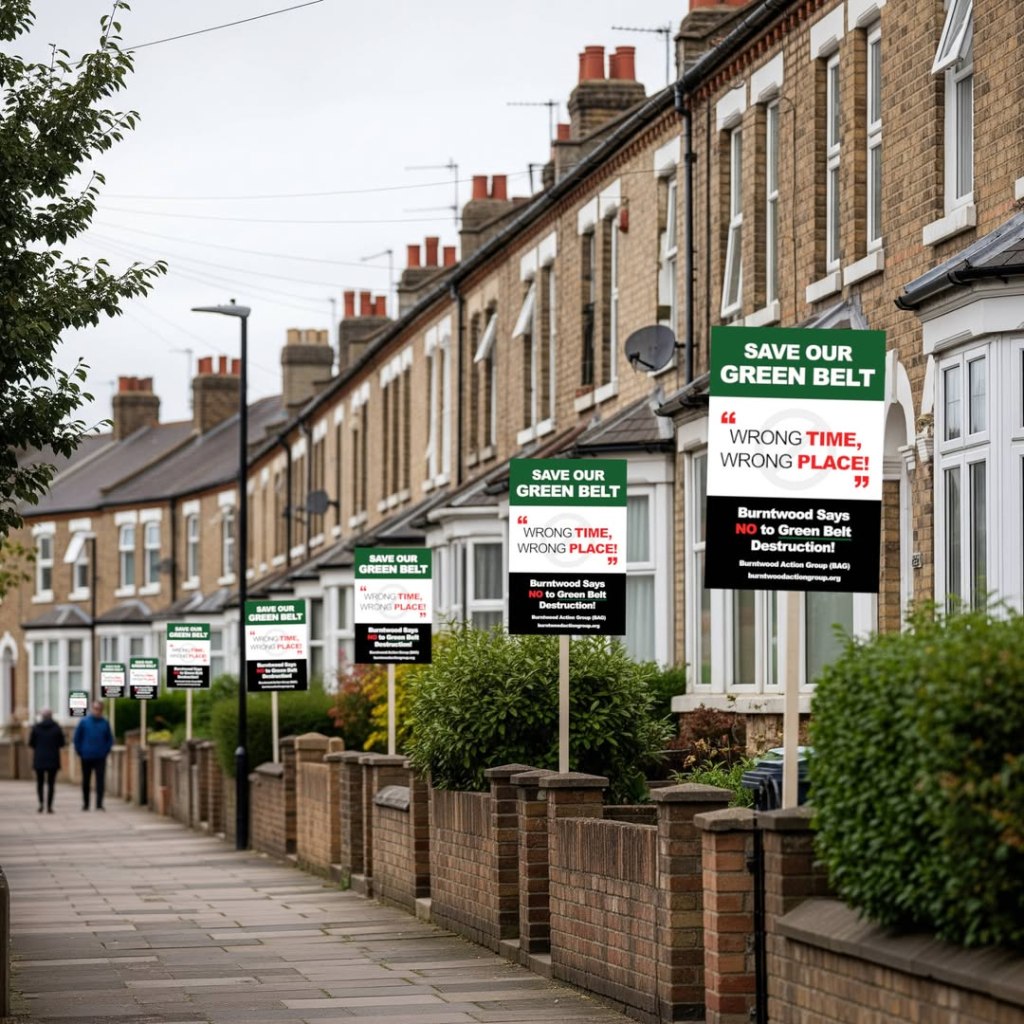
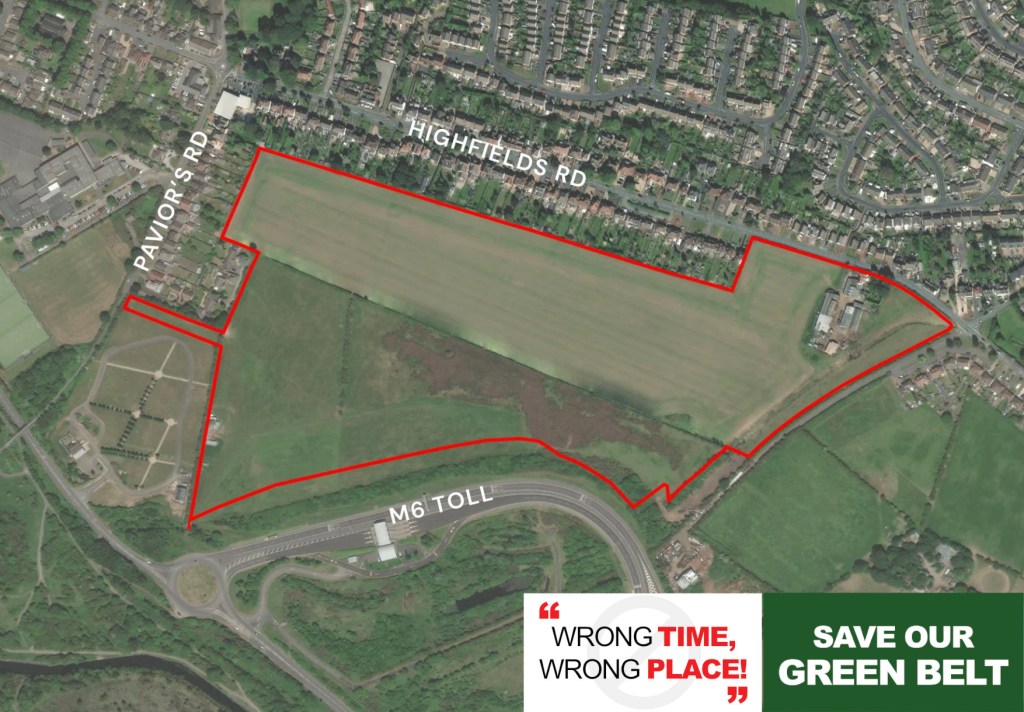
Currently there are 750 homes and a battery farm proposed on Burntwood’s Green Belt. This cannot happen!
#greenbelt #wrongtimewrongplace #burntwoodsaysno
 Burntwood Action Group
Leave a comment